Our raised beds in the polytunnel are now in their fourth year and it is really showing.
Growing in the Polytunnel is something we have been documenting since we installed them back in 2018. We have trailed many plant varieties over the years and have had some interesting results.
I have mostly posted about growing Chilli and Sweet peppers as these are a staple for us and produce very well in the hot summer heat. Tomatoes are another favourite and this year have also produced the most incredible yield in the Polytunnel.
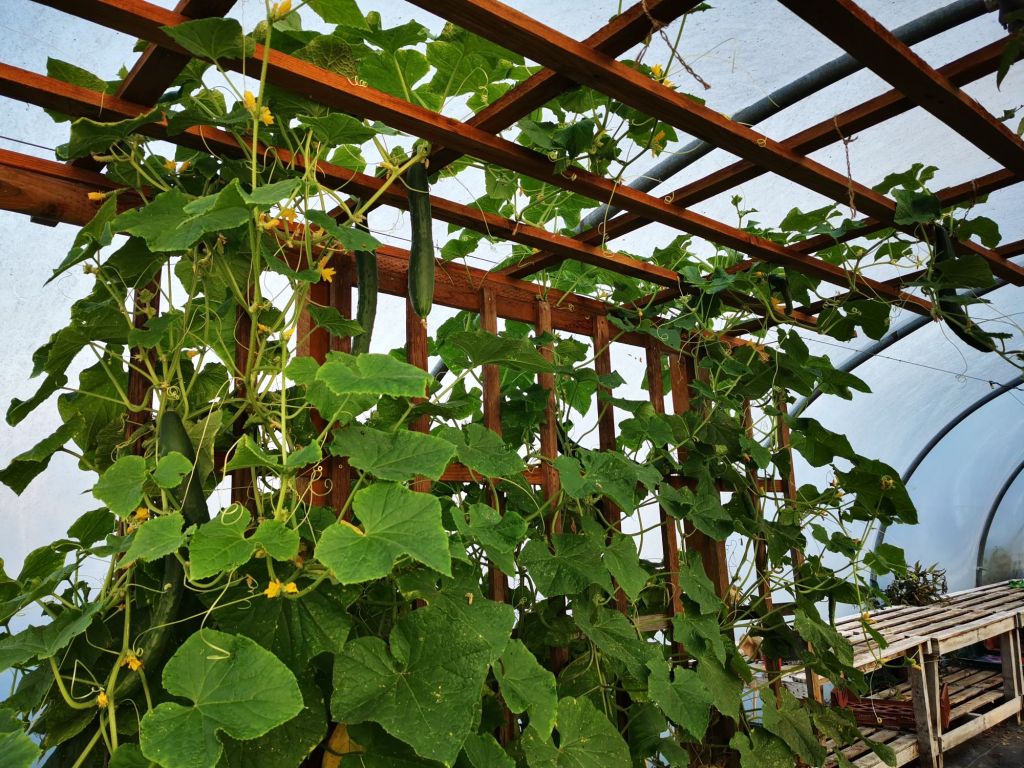
However, what is most visually breathtaking when entering this indoor food garden is the humongous cucumber plant reaching up and over the trellis and climbing out of the bed, trailing along the floor and around the corners!
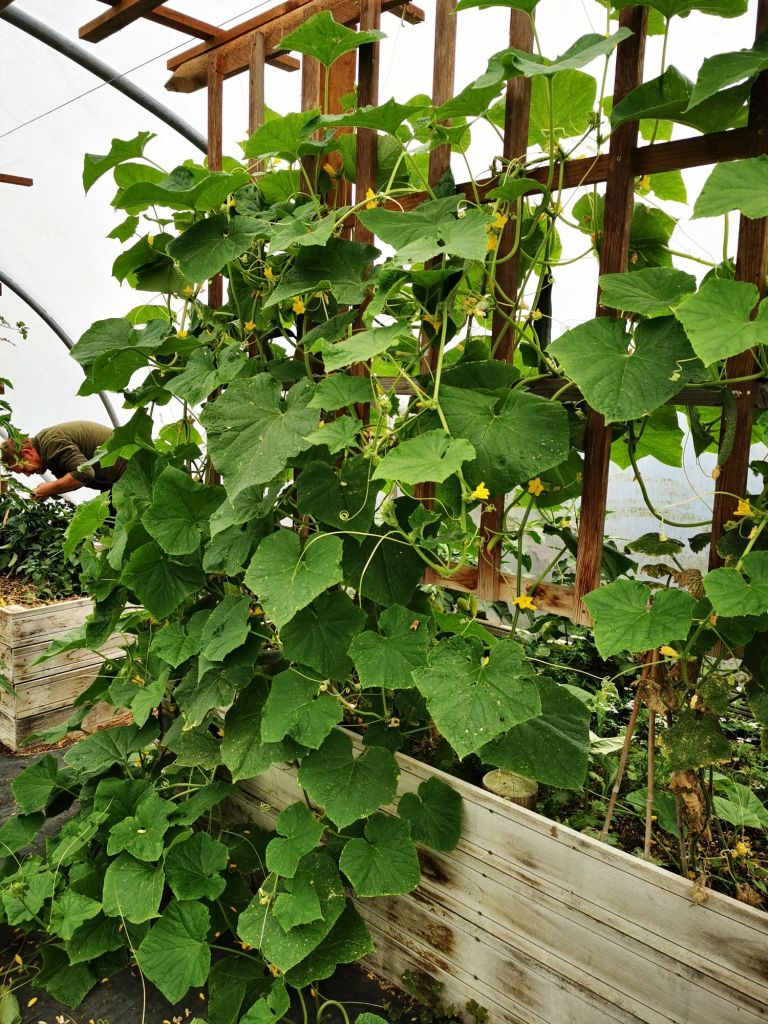
The green fruits hang all over and are also hidden deep within the bush! We grow a lot of cucumbers as they are an absolute favourite snack for us and our ducks and chickens!
Creating the perfect environment
Less is more
One of the most incredible feats of this years yield is that this one plant has taken up the whole space in which we have previously planted 2 or 3 plants.
We experienced that 3 plants (around 2ft apart) was too many as they were overcrowded, and although this isn’t the worst problem, it creates more work as we had to cut it back often and if we left it for too long, the tendrils would attached on to and smother nearby plants.
Two plants appeared to be prolific but still climbing over each other which needed to be maintained.
In both experiments powdery mildew appeared in the humidity of late summer and spreads quickly. Although the fruits still continue to grow, the plant will no longer be able to photosynthesise properly as the fungus takes over.
One plant turned out to be the best decision as it quickly spread across the whole trellis and produced more Cucumbers than the usual two or three plants.
It was happy growing alongside the many sweet peppers and herbs growing in the same raised bed and powdery mildew did not set in until much later than previous years and was did not spread as fast.
The ultimate homemade compost
Our raised beds were built in 2019 and we started them off by layering up the base with decaying logs. These would slowly rot and provide nutrients to the soil, an organic method inspired by ‘hoogel culture in which hills of logs are layed on a surface, covered with soil and planted on top of.
Every year we have to add organic matter in various forms including that from our various compost bins, leaf mould, soil from our wormery and of course, our precious chicken and duck Manure!
4 years on and all that organic matter is decomposing from the base up and provides huge amounts of nutrients. Many mushrooms appear here throughout the year which is a great sign of mycelium in the soil. Mycelium can be identified in the soil even when mushrooms are not present as a grey ash like substrate.
You can cultivate your own mushroom compost at home by providing decaying organic matter for it to grow and by not using harsh chemicals, fungicides or pesticides on your soil! As well as killing the Mycelium, that will also make your earthworms disappear!
It all starts with a seed
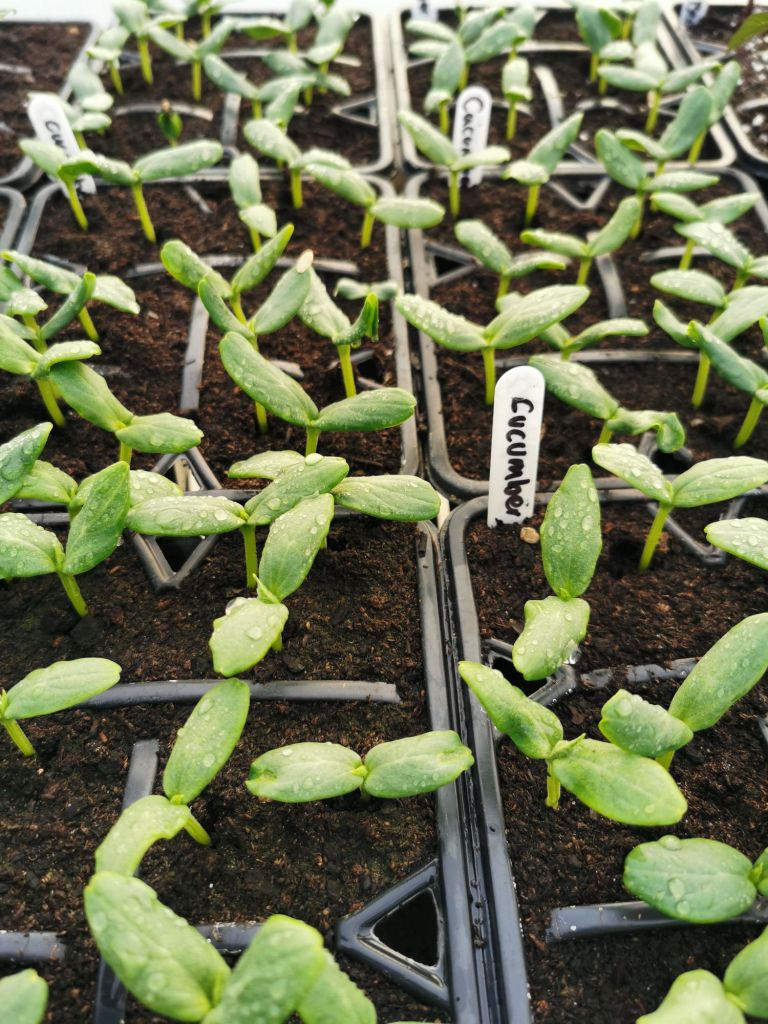
Growing your own food starts with good quality seed and we have grown many varieties of cucumber over the years including both indoor and outdoor varieties. We have trialled some hybrid seed but prefer to grow heritage, non GMO seed as this is the permaculture way.
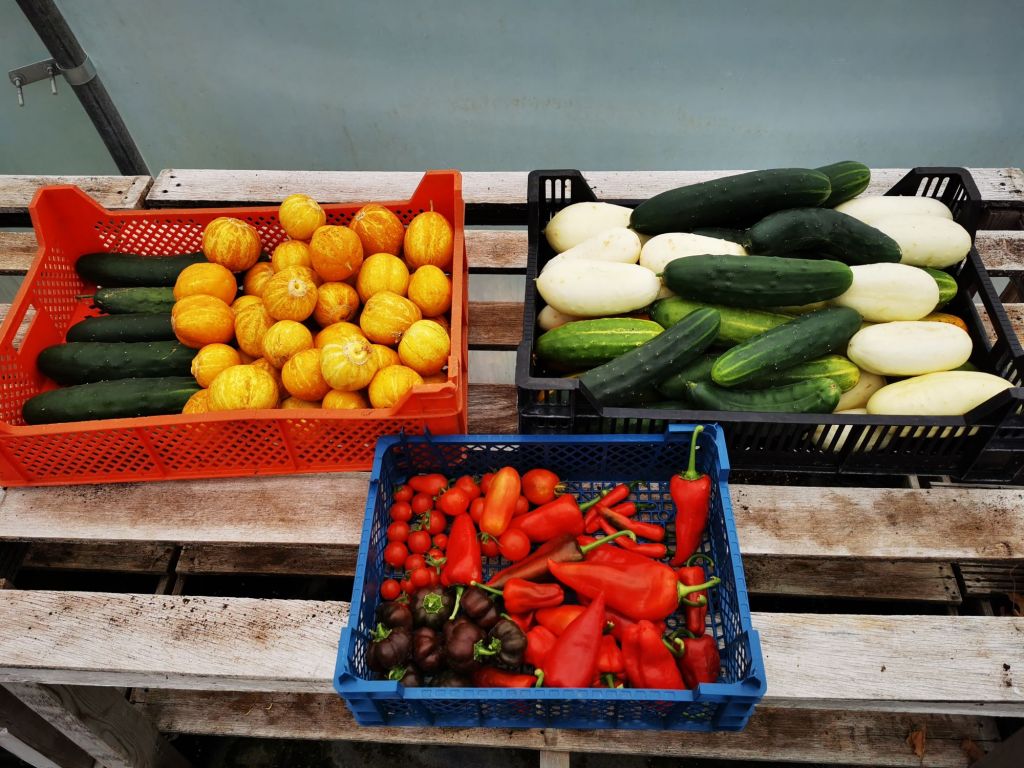
We purchased this particular seed from a reliable, small scale UK supplier and it was listed in 2023 as a new variety. The write up sounded promising as it was developed locally (with 40miles) for many years by a hobby grower who saved their seed since originally purchasing a packet of f1 hybrid seeds. It is believed that years spent collecting the best seeds created a plant perfectly adapted to the local climate, so we would also be able to grow it outdoors in our old greenhouse area.
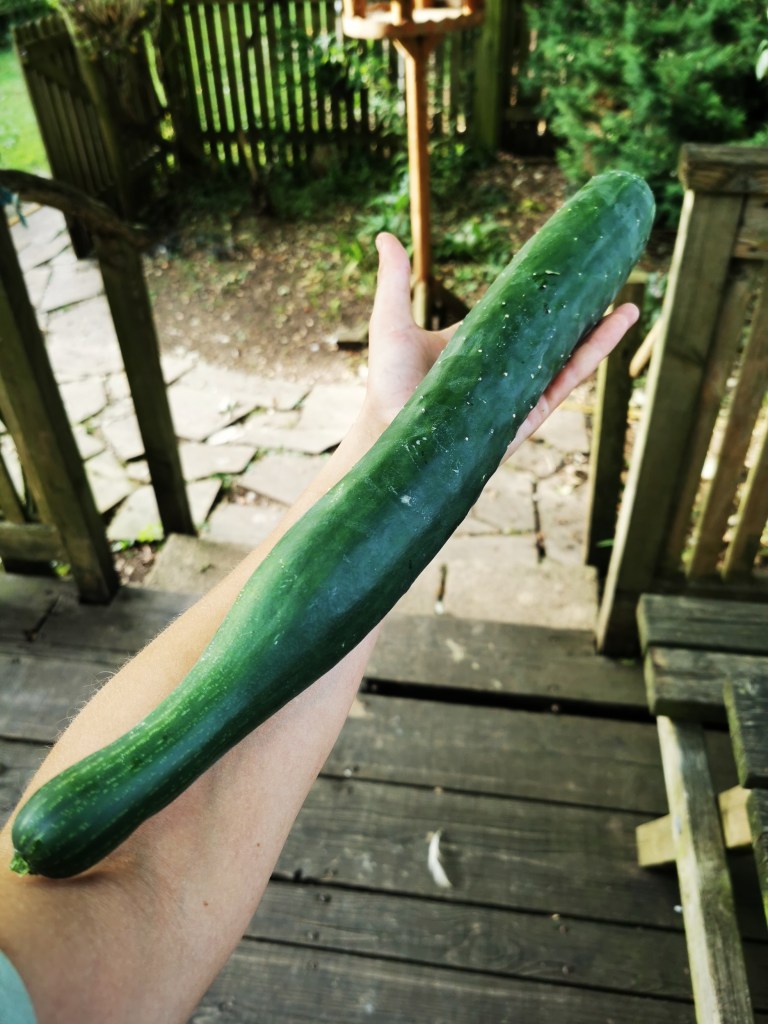
It produced an incredible amount of long and slender, very tasty Cucumbers!
More sun the better!
Another record breaking summer which started abruptly in late spring after the coldest winter yet (that’s a whole other story!) and an unusually warm start to autumn definately played a big part in our abundant harvest.
As the polytunnel gets very hot and the ventilation on the doors does help to cool it down, on windless days the temperature can hit a whopping 50°c during peak sunlight.
Plants outdoors were much more exposed but placed central to the old greenhouse with some wind shelter and a little shade, they were still prolific but are affected by the first frost and therefore have a shorter season than those in the Polytunnel.
Lots of watering!
Cucumbers are very thirsty plants so making sure the soil does not dry out on the hottest days is crucial. Luckily we have water butts in place nearby to give them as much as they need. We water at the base to avoid the spread of any mildew and to not create an overly humid environment, which can easily be done if there is not enough ventilation.
Harvest fruits regularly
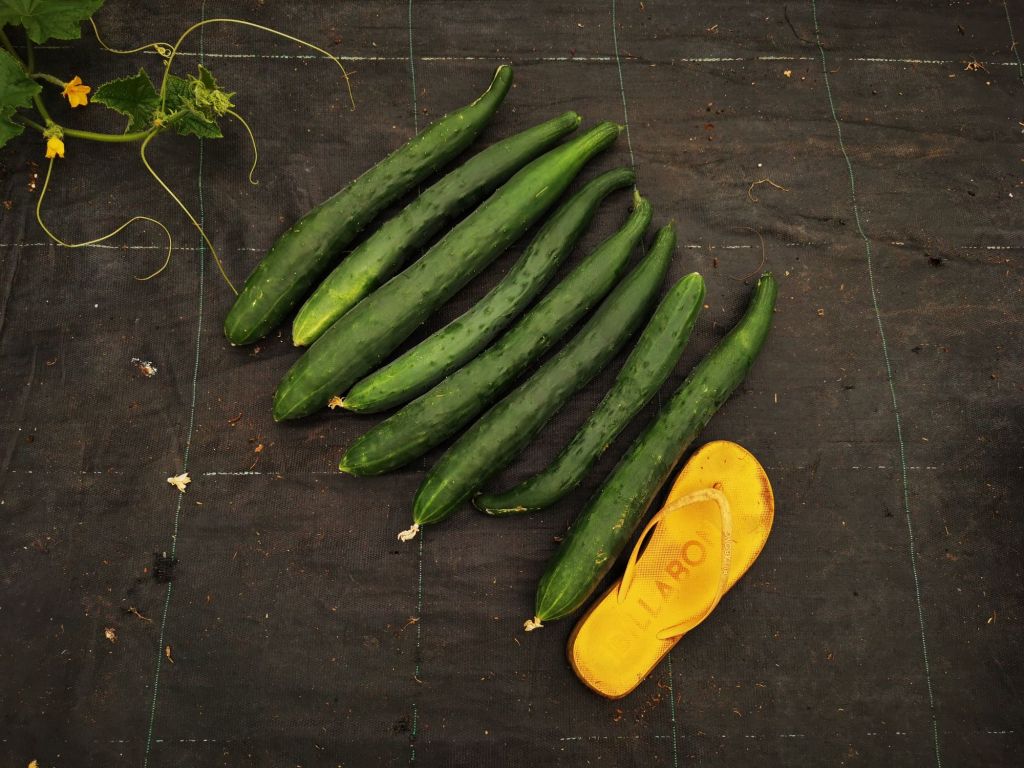
Fruits can grow very quickly once the plants are established (usually in July) and so it is better to check in on them regularly and pick the fruit while it is young and juicy as opposed to getting to letting them get too big, although it is tempting to see just how big they can get!!
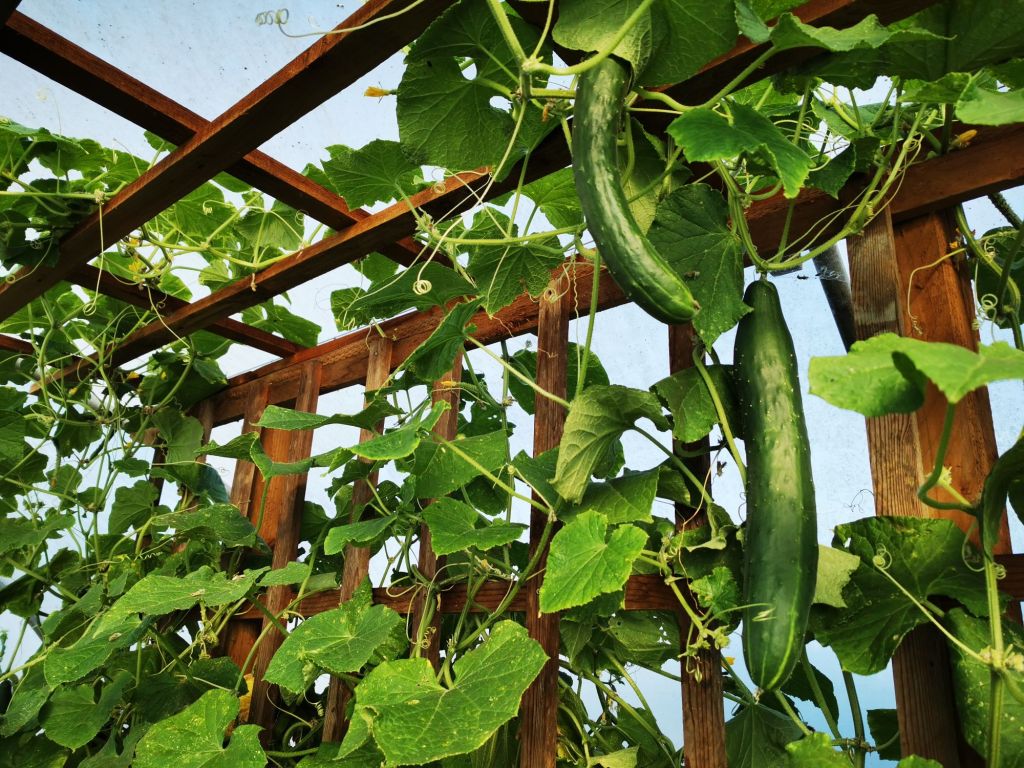
When you get such a magnificent crop it makes sense to save a few Cucumbers to mature so the seed can be collected. I was stunned to see just how long the mammoth fruits dangled from the ceiling, sucking up every last bit of goodness from it’s vine. They took weeks to eventually start turning a paler green, indicating its maturity and I finally harvested their seed in November.
More from the blog…
- My top five favourite chilli peppers to grow from seed every year!
- Our favourite plants to forage for making unique Christmas wreaths
- Harvesting compost from our worm farm that recycles waste into ‘gardeners gold’
- Our best ever cucumber harvest in the Polytunnel!
- Autumn In the Polytunnel

 Homegrown and Hopeful
wow!! 64Harvesting compost from our worm farm that recycles waste into ‘gardeners gold’
LikeLike