Autumn provides an abundance of colour and textures in the garden, arguably the best and most stunning season, many plants, shrubs and trees make perfect materials for diy festive wreath making!
It has become very trendy around here to attend a ‘wreath making’ class during the run up to Christmas but they often charge a whopping fee, usually around £60 – £80 for a few hours of guided fun and if you’re lucky a mince pie may be thrown in! They tend to display the same old commonly used materials such as Blue and Norwegian Spruces for a base which are shipped in from distant places and make up the majority of the high price tag, being sold as ‘traditional’ and ‘premium’.
But, wreath making does not have to be this expensive if you are willing to spend the time gathering your own materials and purchasing a few basic bits for a frame and final decorations. With the evolution of online media, it is now possible to watch multiple ‘how to’ videos from professional florists to easily learn different and best techniques on how to create your own masterpiece, and it is so much more satisfying! Mainly because of the feeling of completing a task from ‘start to finish’ much like growing plants from seed, but also because it can be achieved for a fraction of the price of attending a class or purchasing a handmade wreath (around £40 – £80) and if foraged, yours will be truly unique! Get your friends together and make it a social event, split the cost of your base materials and share tools to save more money and you will not regret this kind of festive fun!
If you don’t have the following plants in your garden, you will likely recognise them from around town, in local woodlands or in your neighbours gardens. Few are native to us here in the UK but most are commonly cultivated and sold at local nurseries which seem to all more or less sell the same plants these days, meaning they can be found easier than you’d think.
If you’re designing a new garden it is worth considering which plants will be beneficial not only to your local wildlife, for future composting and ornamental value, but also for creative projects later on such as wreath making, fresh bouquets and dried flowers.
Before you go all happy happy, snippy snippy, it is polite to ask permission before you go chopping away in peoples gardens, but having said that, all of the plants mentioned, once established are usually very abundant and most people will be more than happy to share.
If we use our friends and families plants as a source we tend to say thanks by offering them something in return, then everyone’s happy! Social media is an excellent way of identifying who’s got what in their gardens simply by asking out and often people don’t realise the value of their beautiful shrubs and trees until they’ve seen them used in a creative way!
Creating a base from scratch
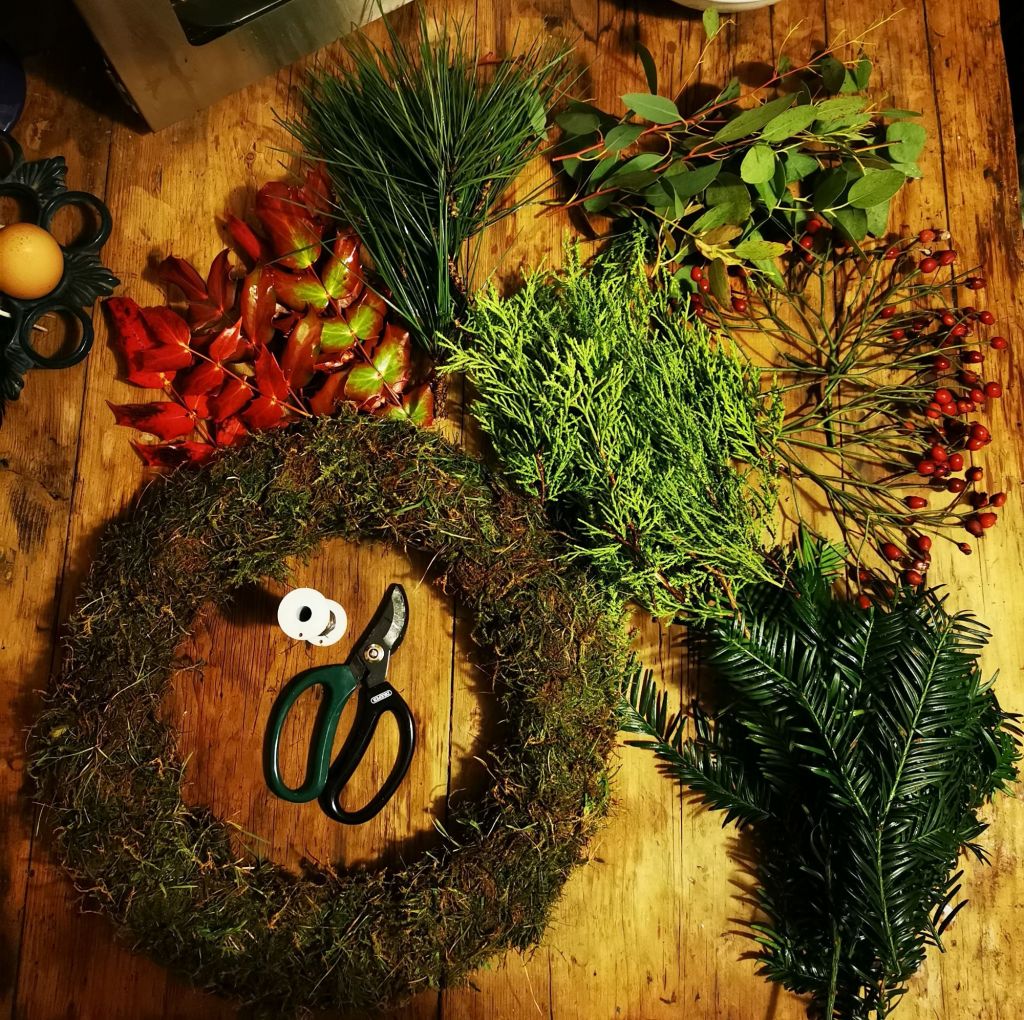
The most important part of a making a long lasting wreath is a fresh base, and we always opt for sphagnum moss as it holds moisture and can be rehydrated later on if needed (if not exposed to the weather or placed nearer a heat source).
Materials and tools used to create a strong and sturdy base include a metal wreath ring, floristry wire and secateurs/wire cutters.
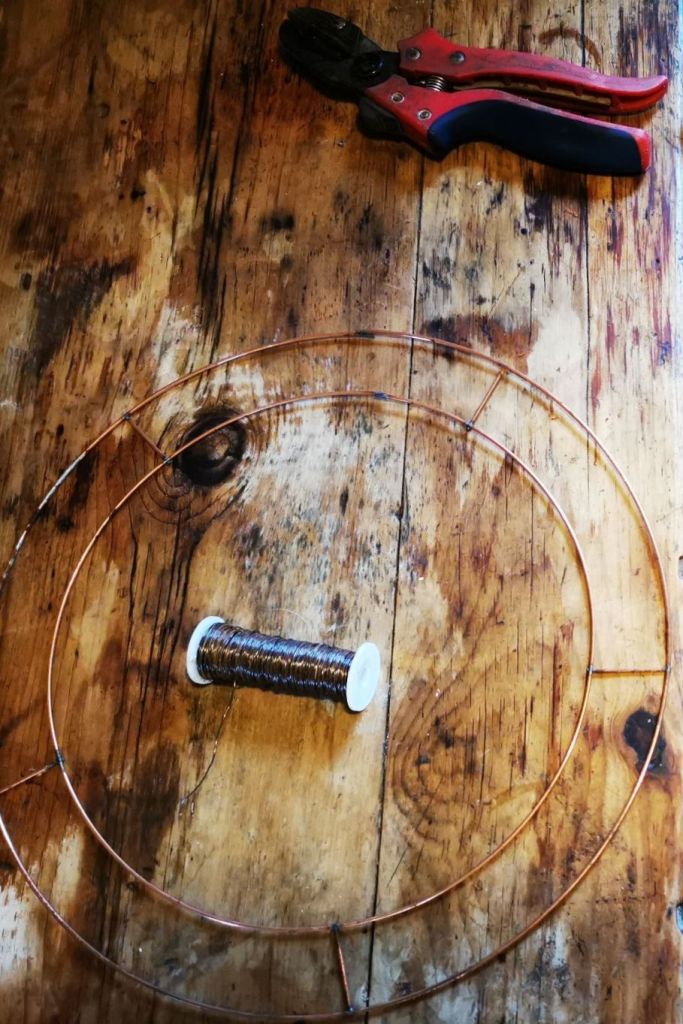
There are many size options for your wreath base and they can be as small or big as you like. We generally go for a medium size base of 14inches as this is a good fit for the average door, and the weight doesn’t warp the shape of the wreath when damp and heavy.
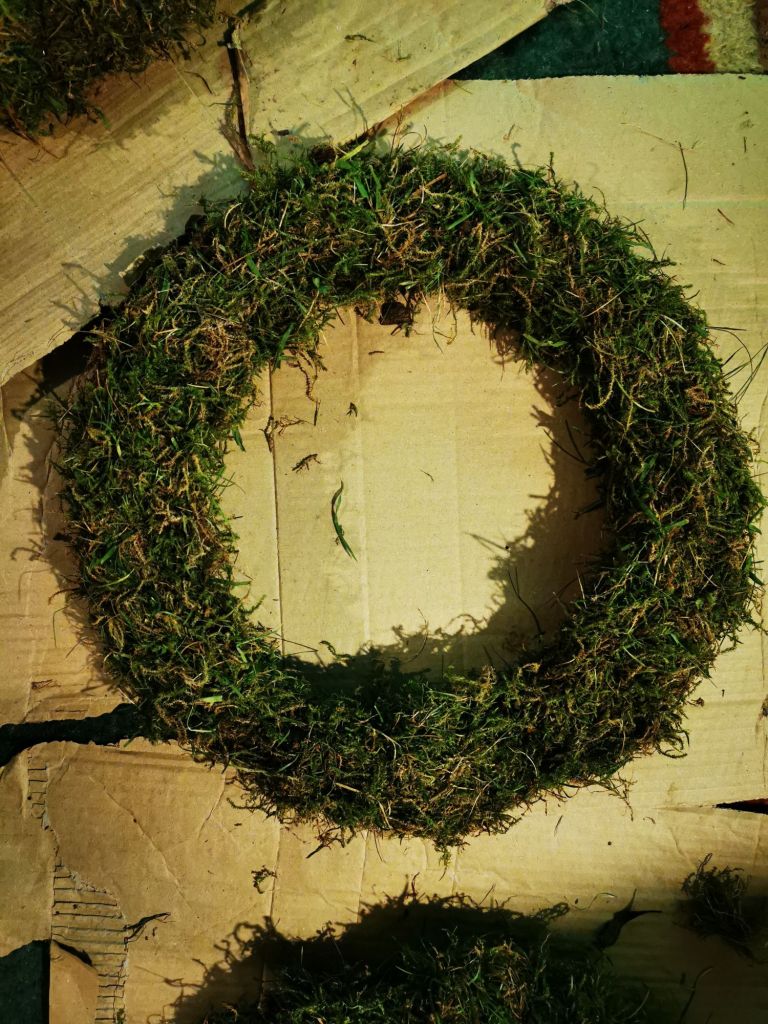
Collecting moss takes a bit of time but our lawn has an absolute abundance in Autumn and Winter, so much so that it has a natural bounce to it when walking on, and after harvesting crates of the stuff, it still looks barely touched after. It is of course infiltrated with bugs, rabbit droppings, tufts of grass, clumps of mud and weeds, so it needs thoroughly rinsing and then leaving out to drain so it no longer drips water when squeezed.
It is wrapped handful at a time around the metal base and secured with the floristry wire until we have created a compact, sturdy wreath with none of the metal base exposed.
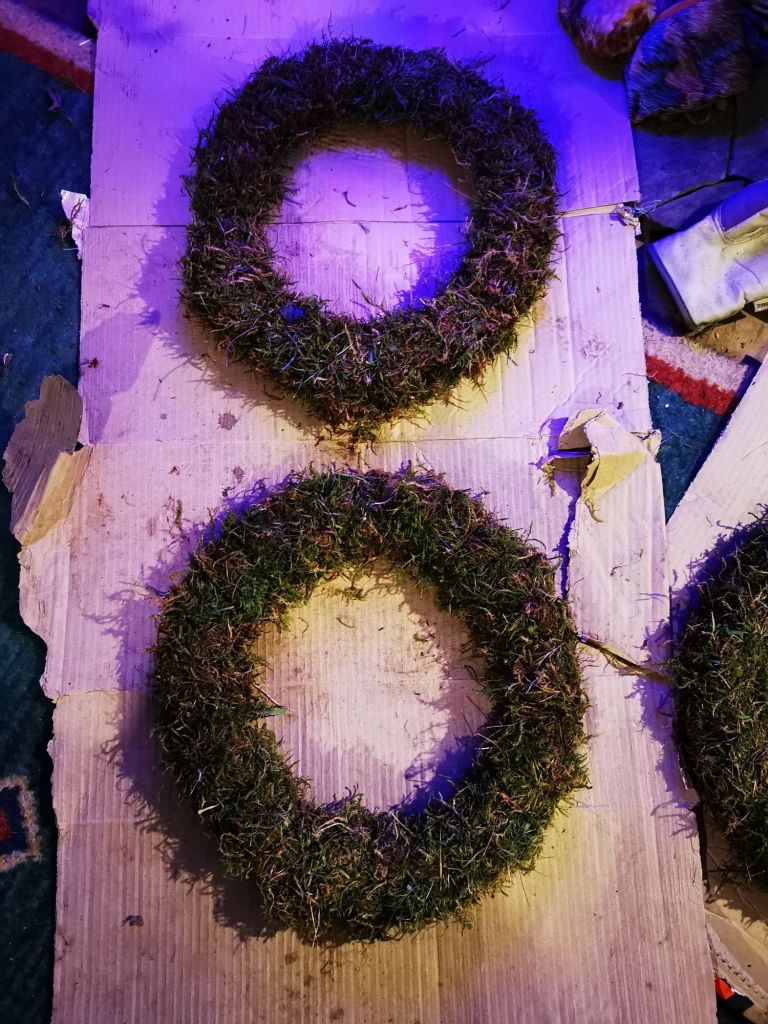
If you don’t have the time or place to forage your own moss, it can usually be found at your local wholesale florist or online, and comes prewashed and ready to use, often just needing rehydration upon purchase.
If you don’t fancy having a go at this step and you just want to get straight to the decorating process, you may be tempted to skip the next part of the process altogether by going straight to the pre-made moss wreath aisle!
Gathering foliage
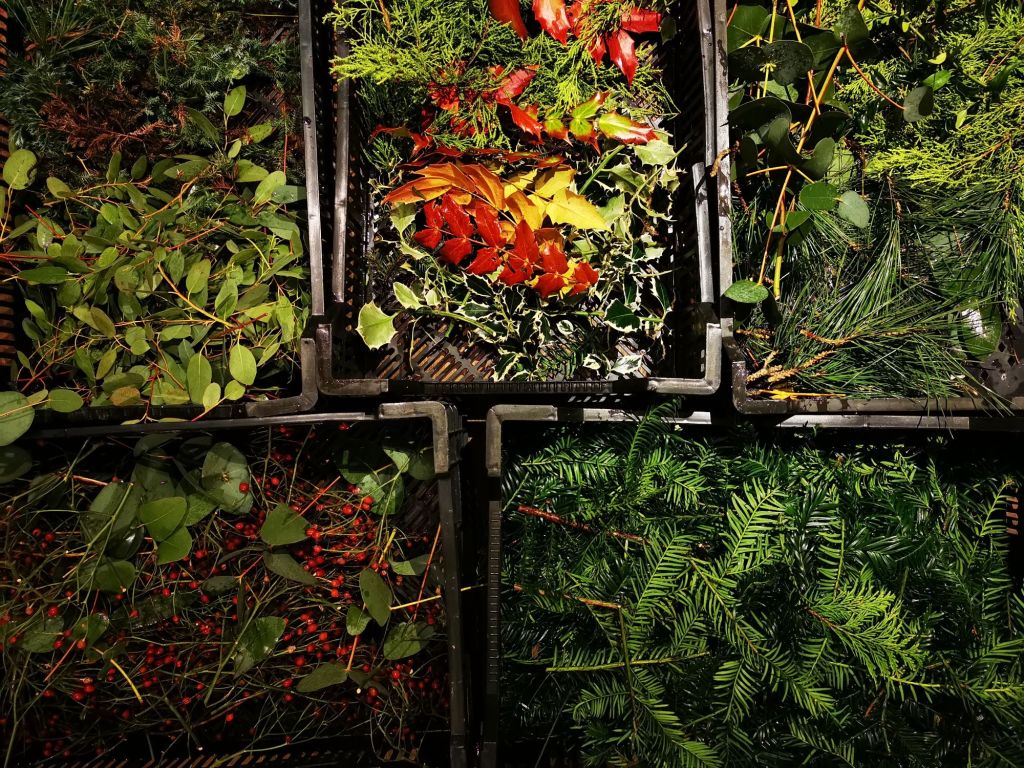
Most of the foliage used for making festive wreaths are from evergreen shrubs and trees as the leaves stay fresh for a long time once harvested. They come in all shapes, sizes, colours and textures giving you the ability to make something really unique.
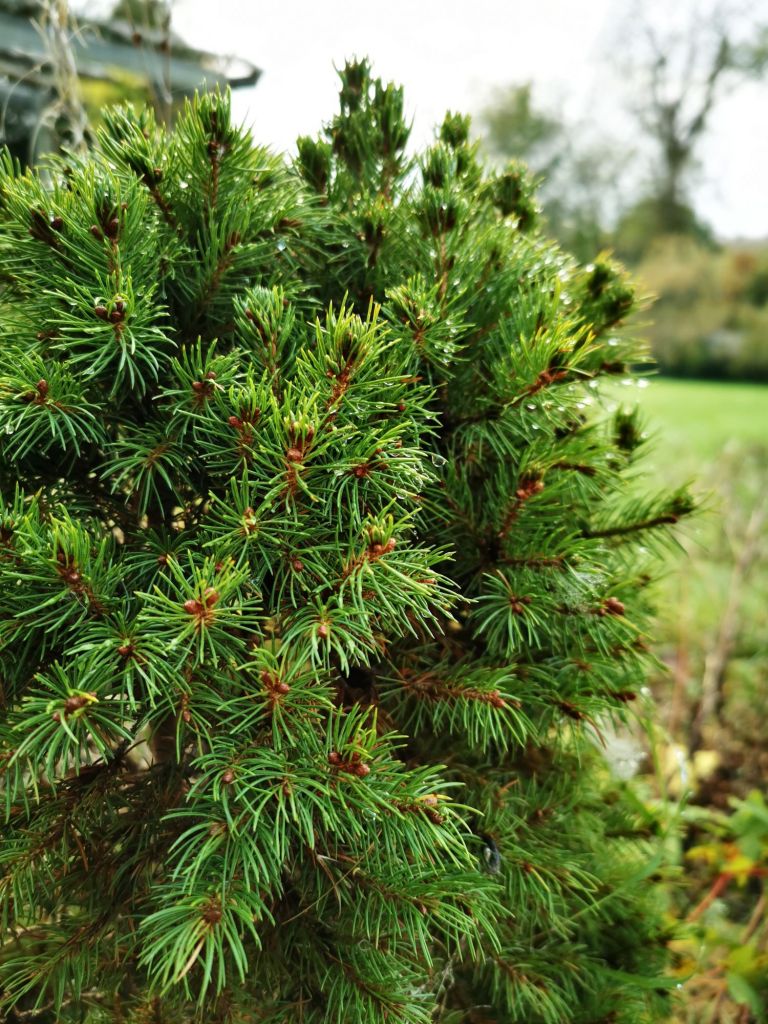
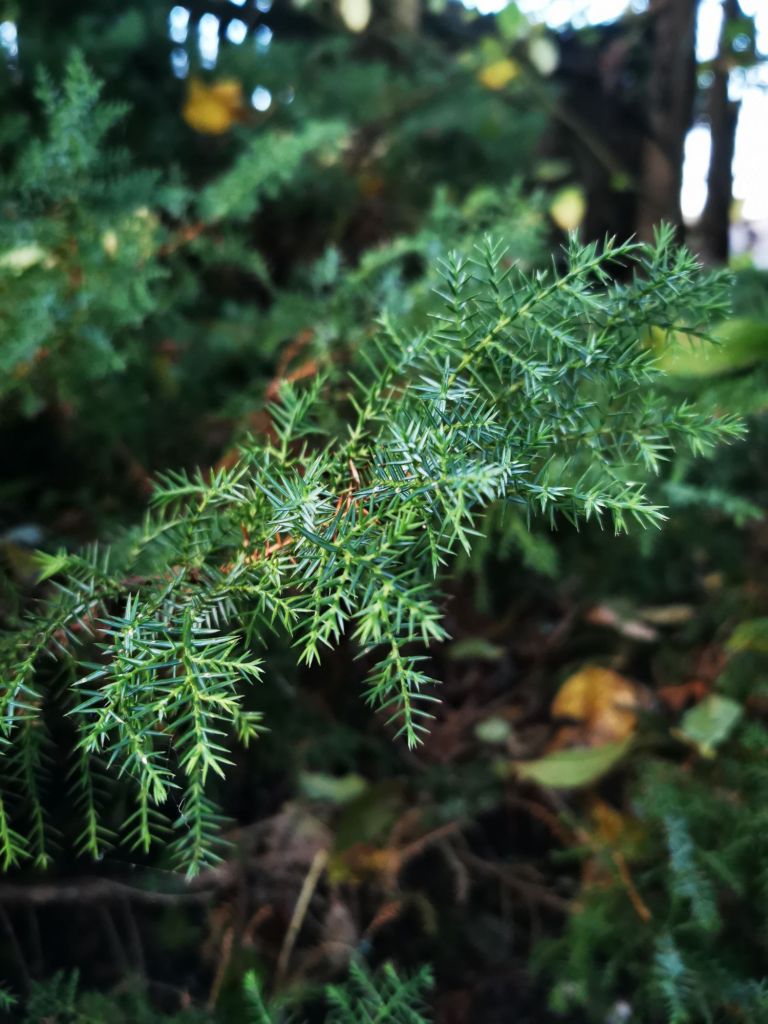
Conifers
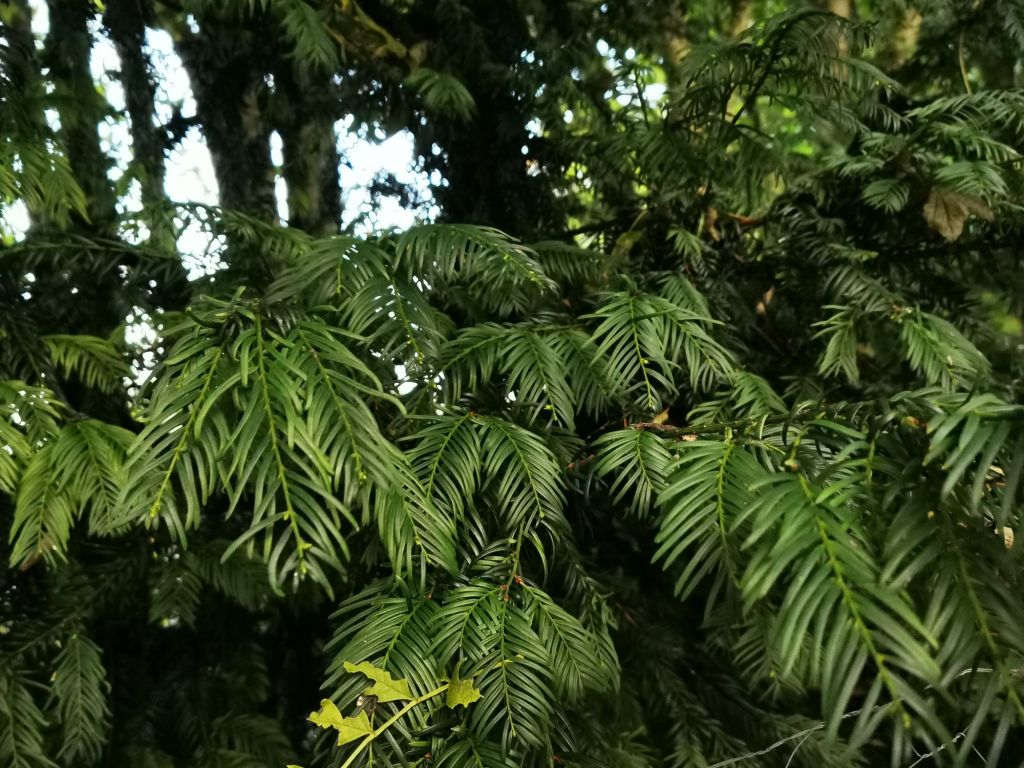
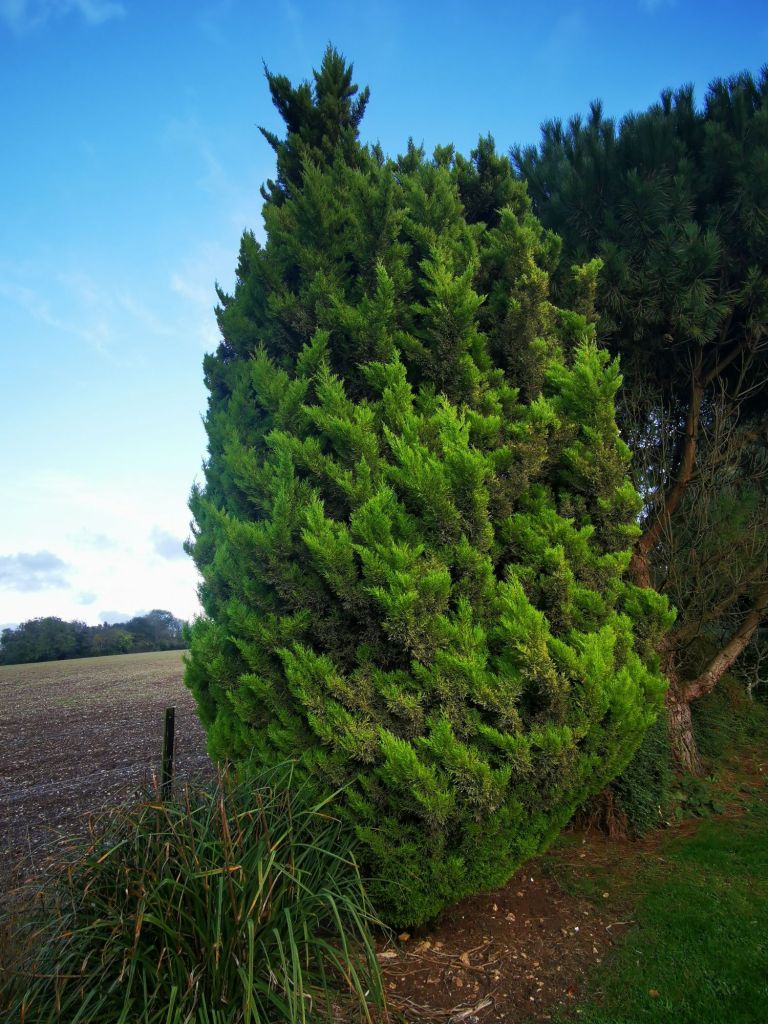
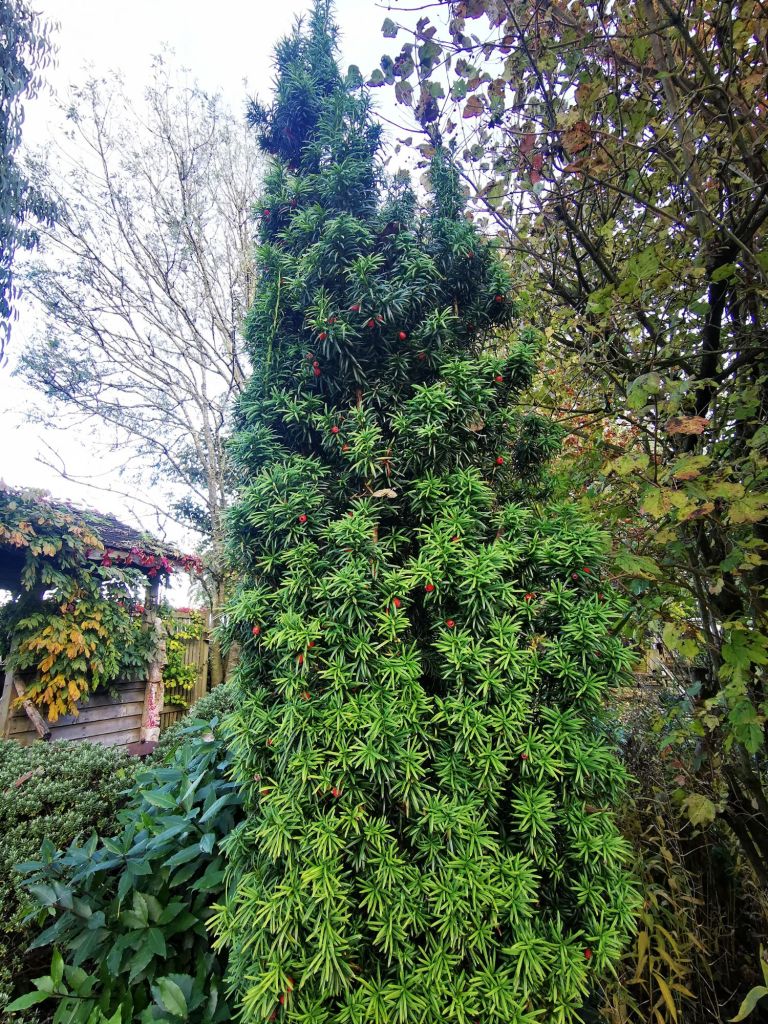
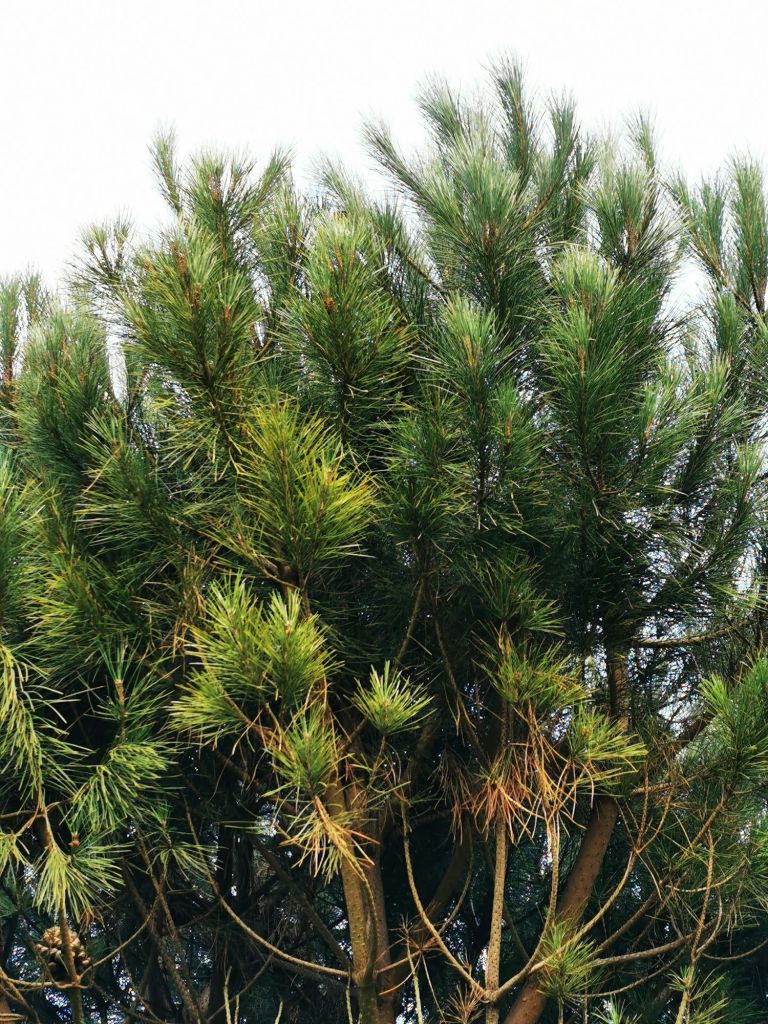
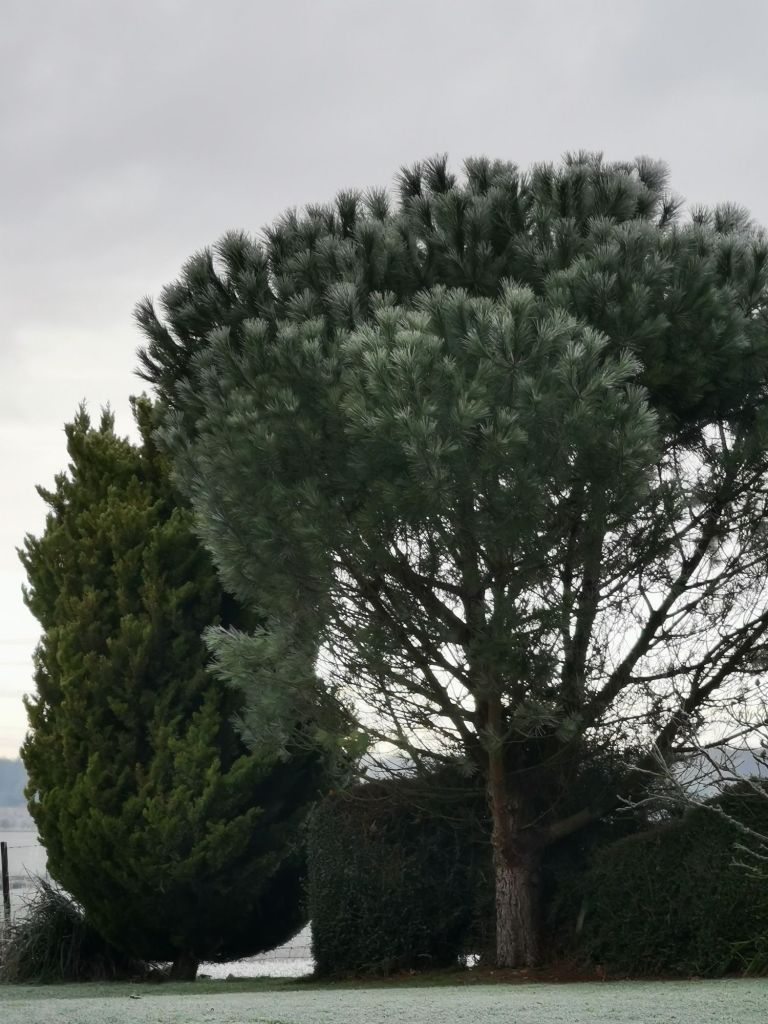
Pines
Although there is only one native pine here in the UK (Scots Pine) there are many decorative pines planted in gardens and public areas, often used to adjust the local soil PH, and for the abundance of fallen needles, which can be collected and used elsewhere, including our chicken run!
Junipers
Eucalyptus
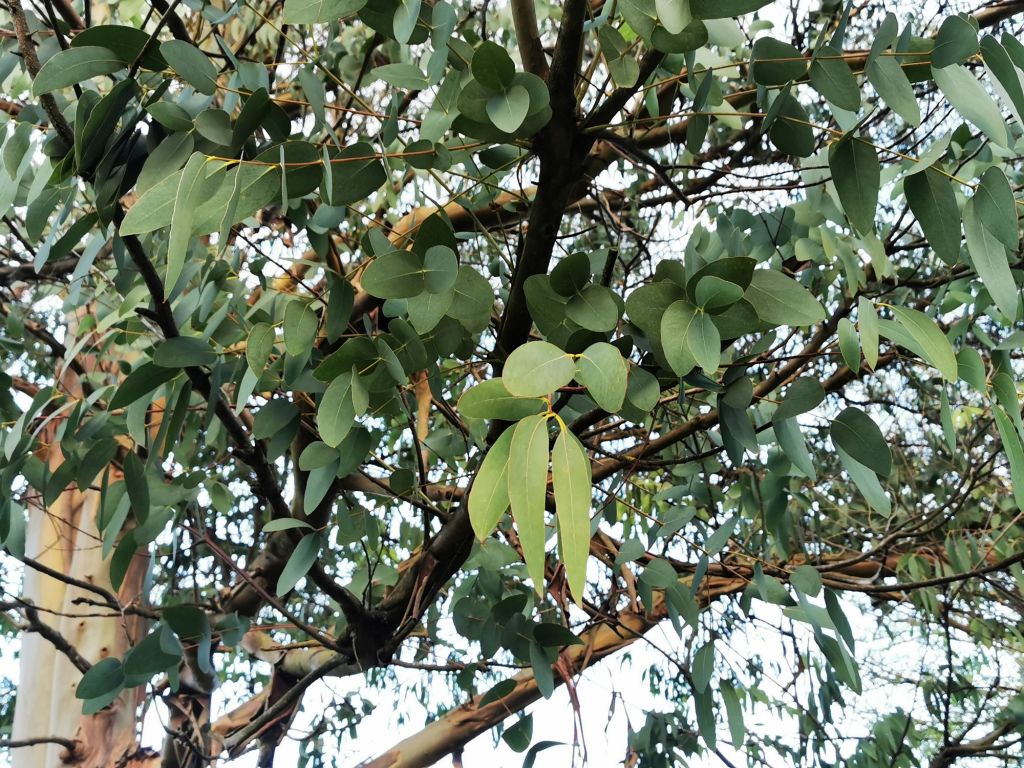
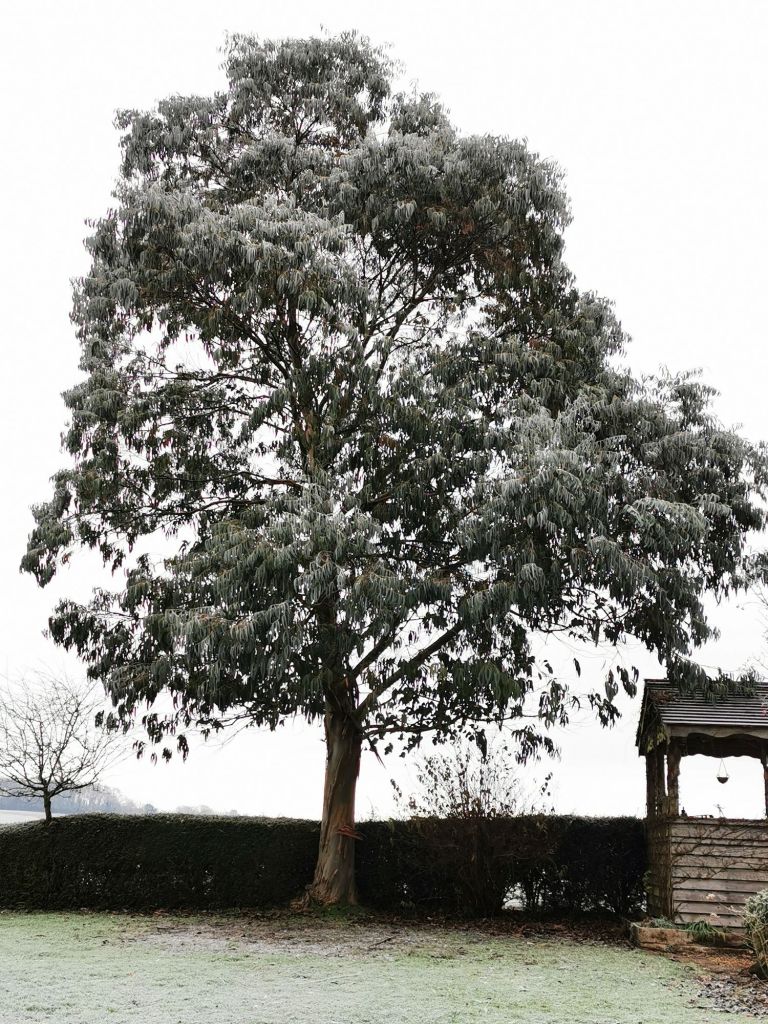
There are many dwarf Eucalyptus varieties to fit smaller spaces, each with different foliages, very popular in floristry, it is used all year round for arrangements but is not exactly cheap despite it’s fast growing qualities.
Holly (Ilex)
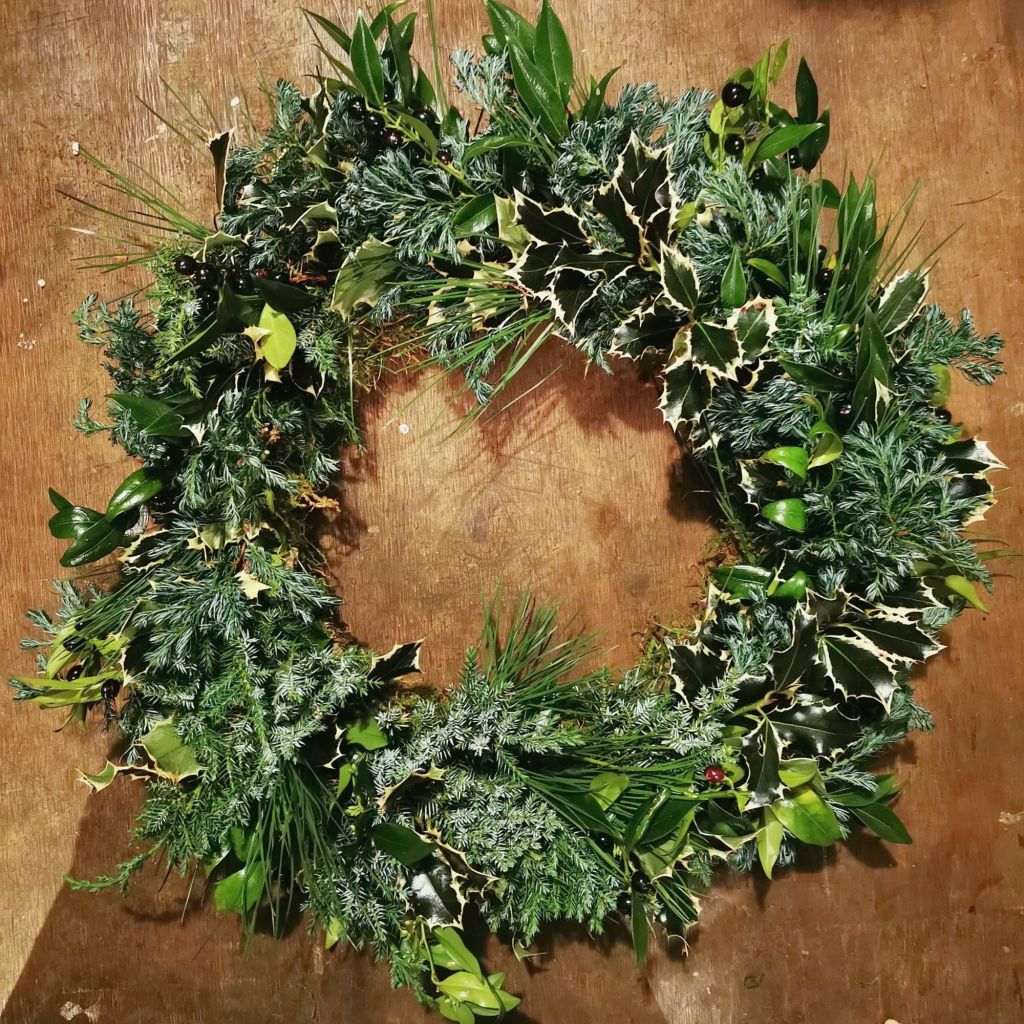
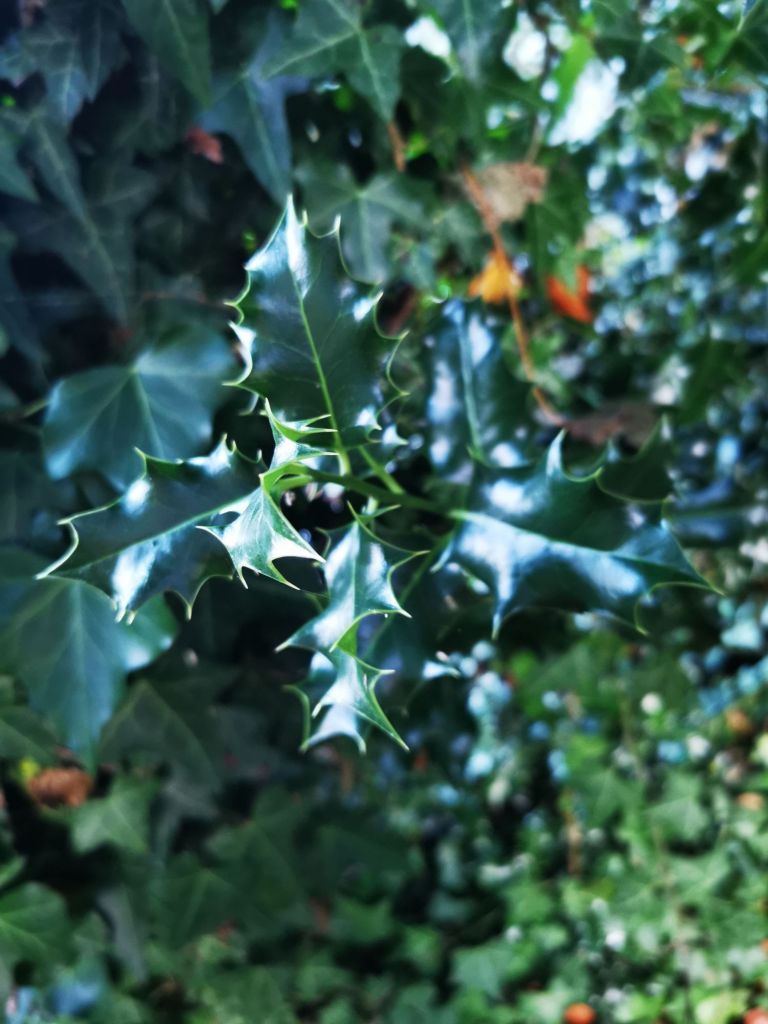
Variegated silver edge Holly has a beautiful bold contrast which really stands out against other shades of green.
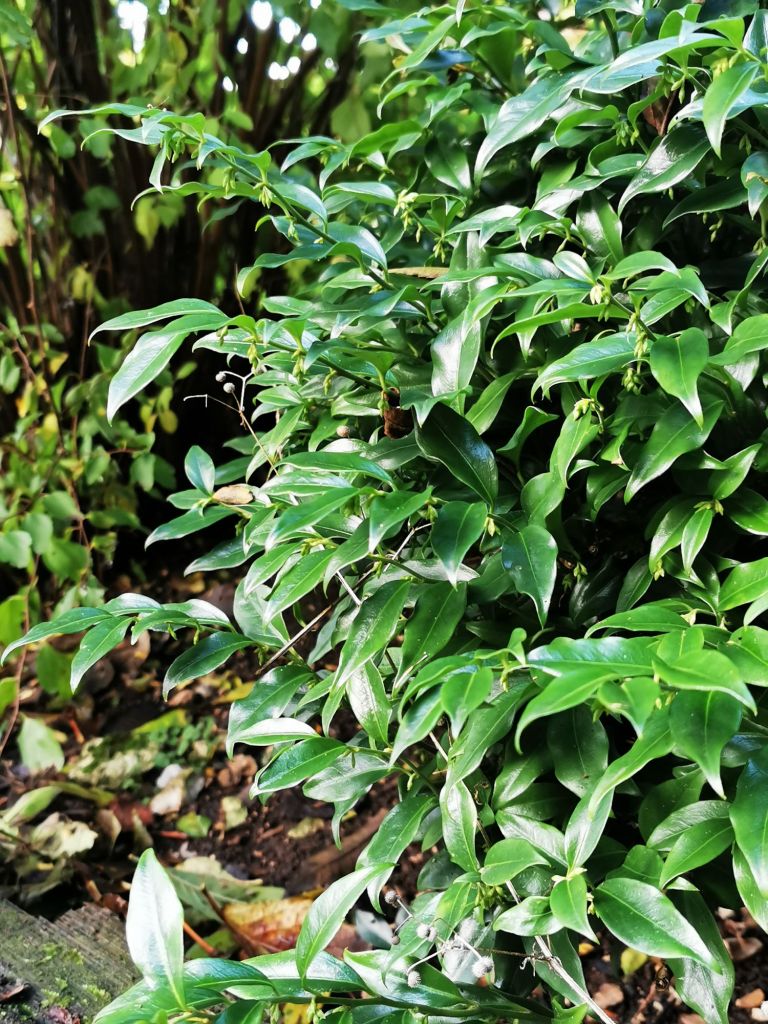
Sarcococca
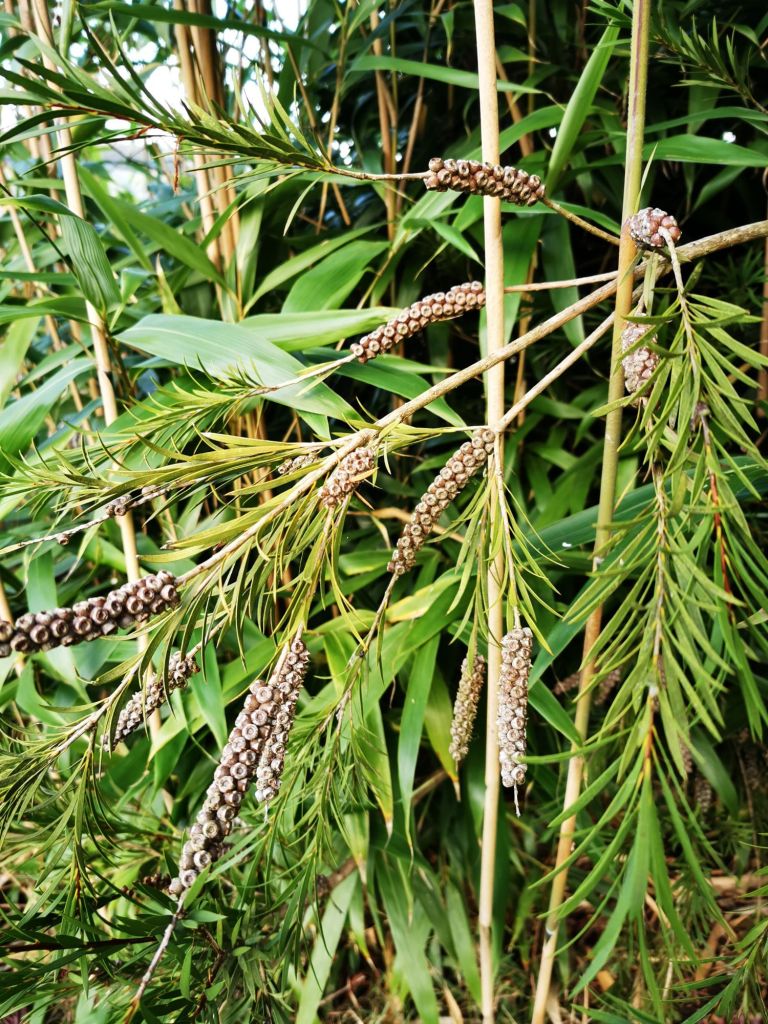
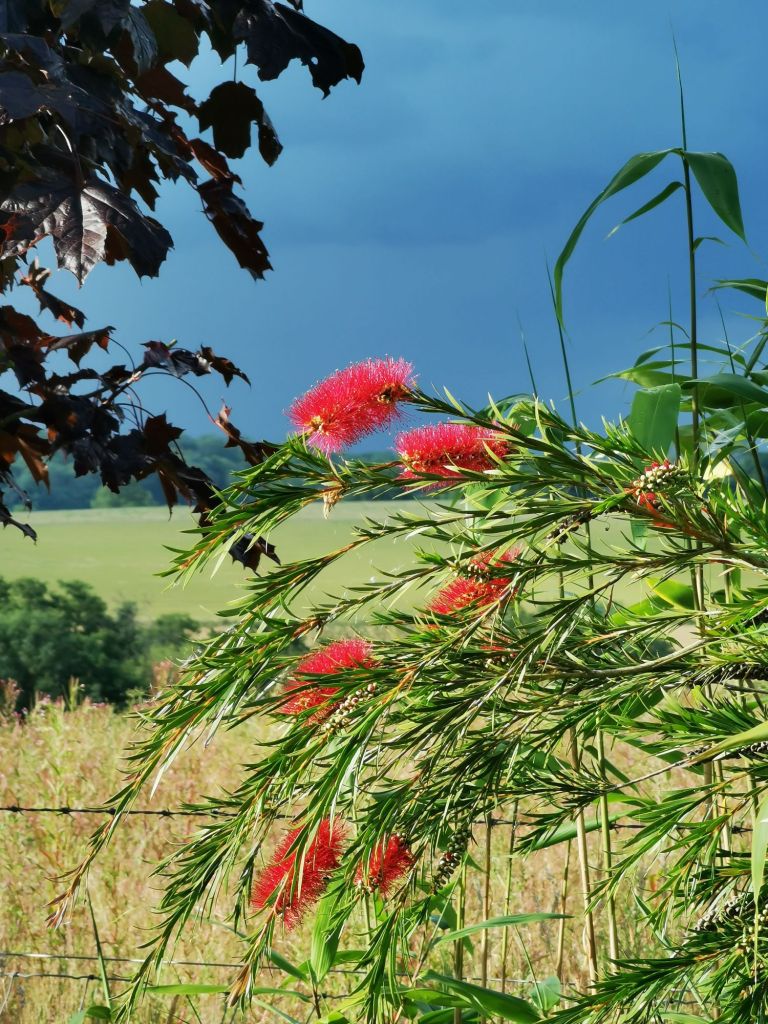
Bottlebrush (Callistemon)
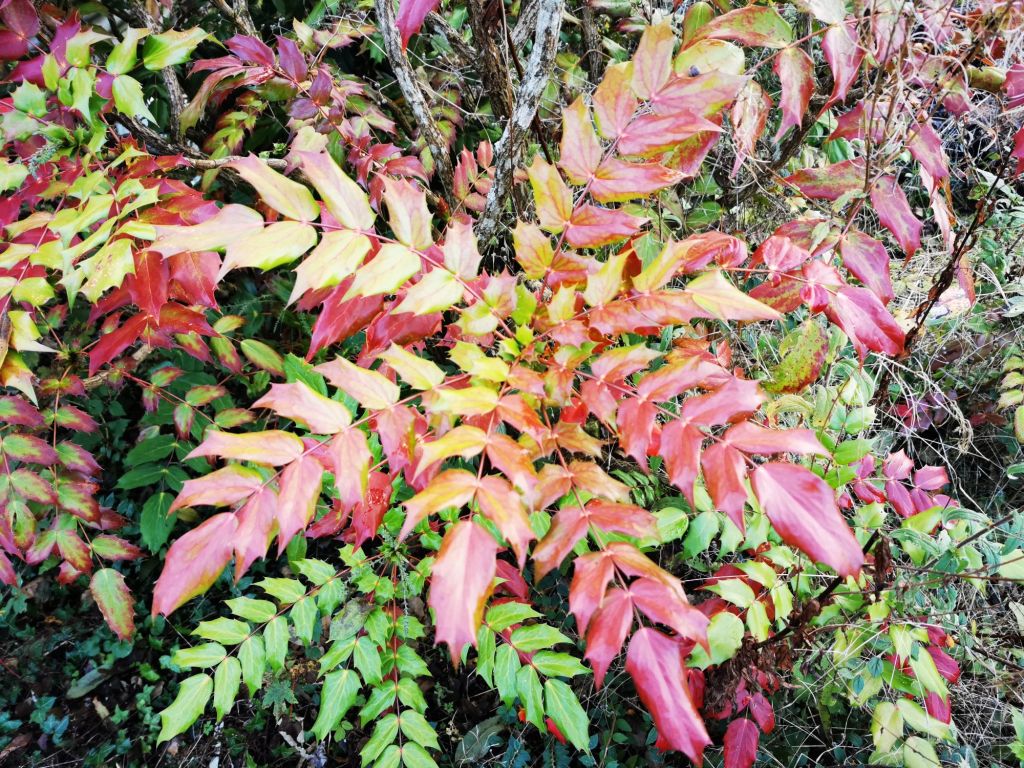
Mahonia
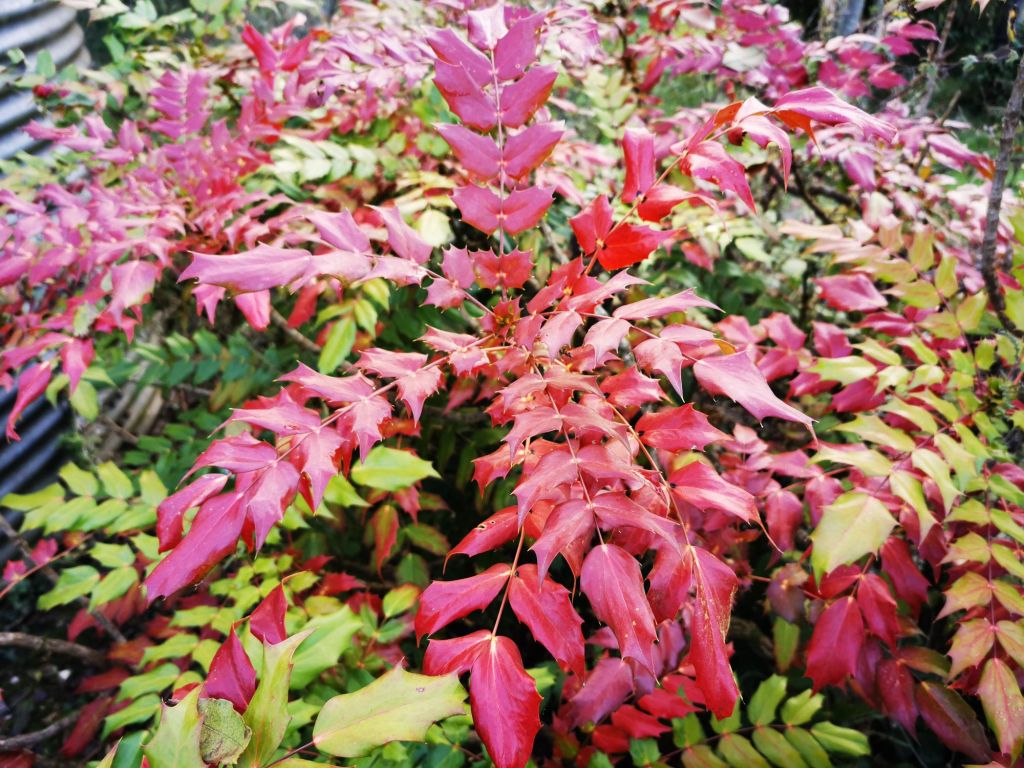
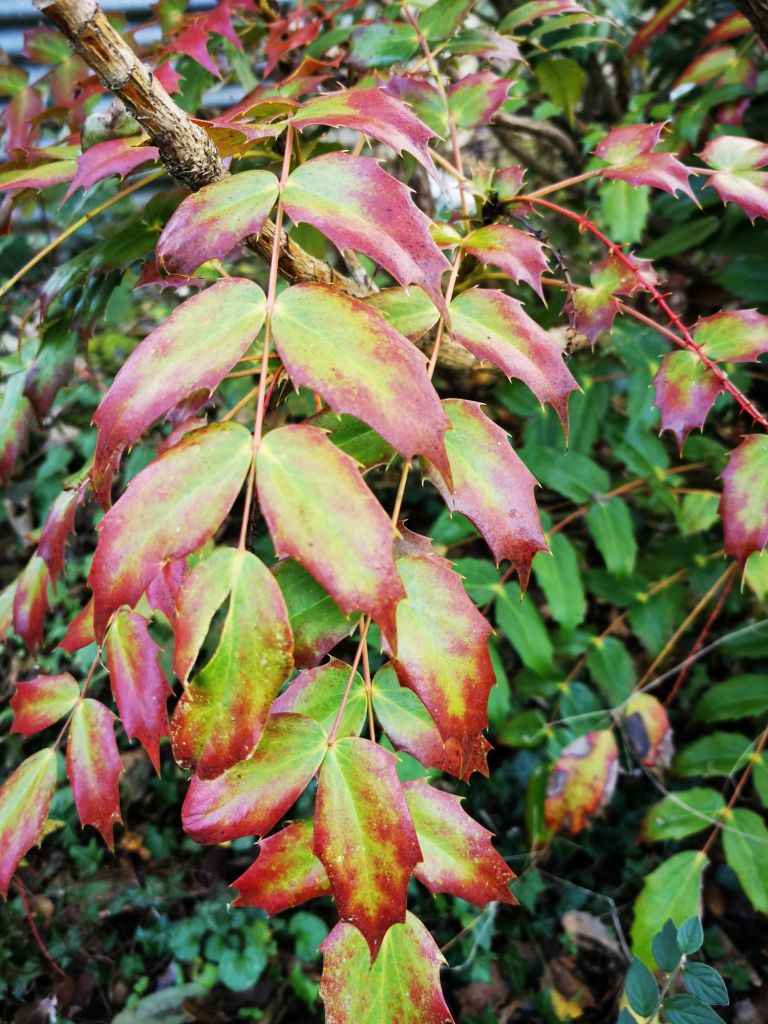
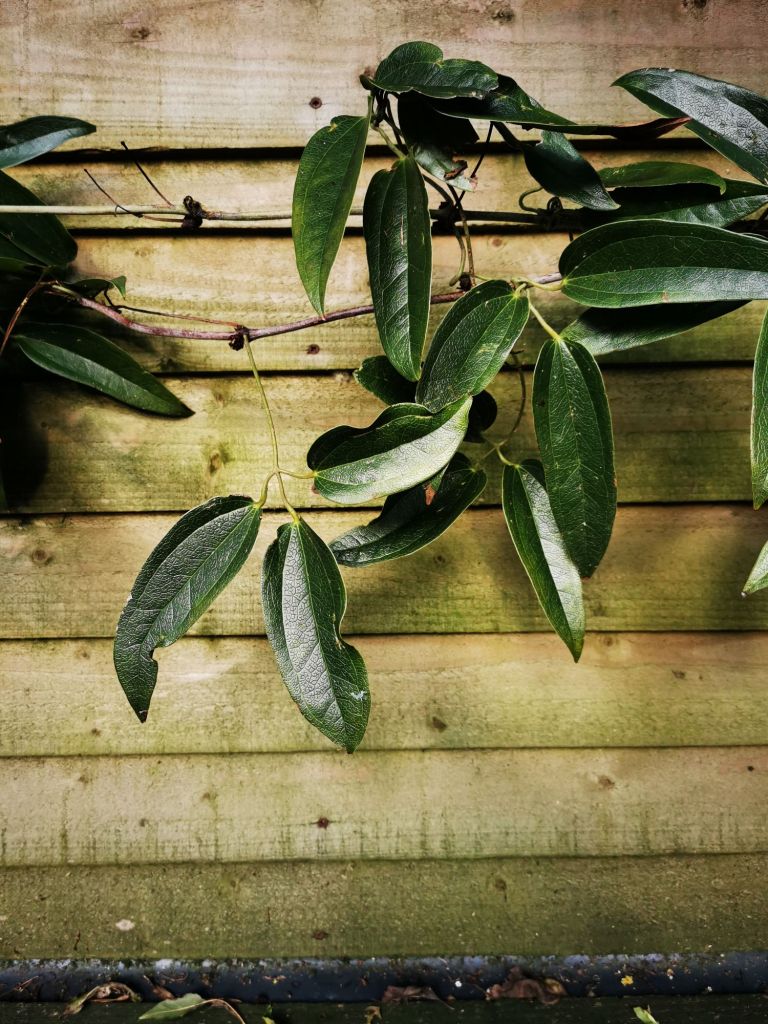
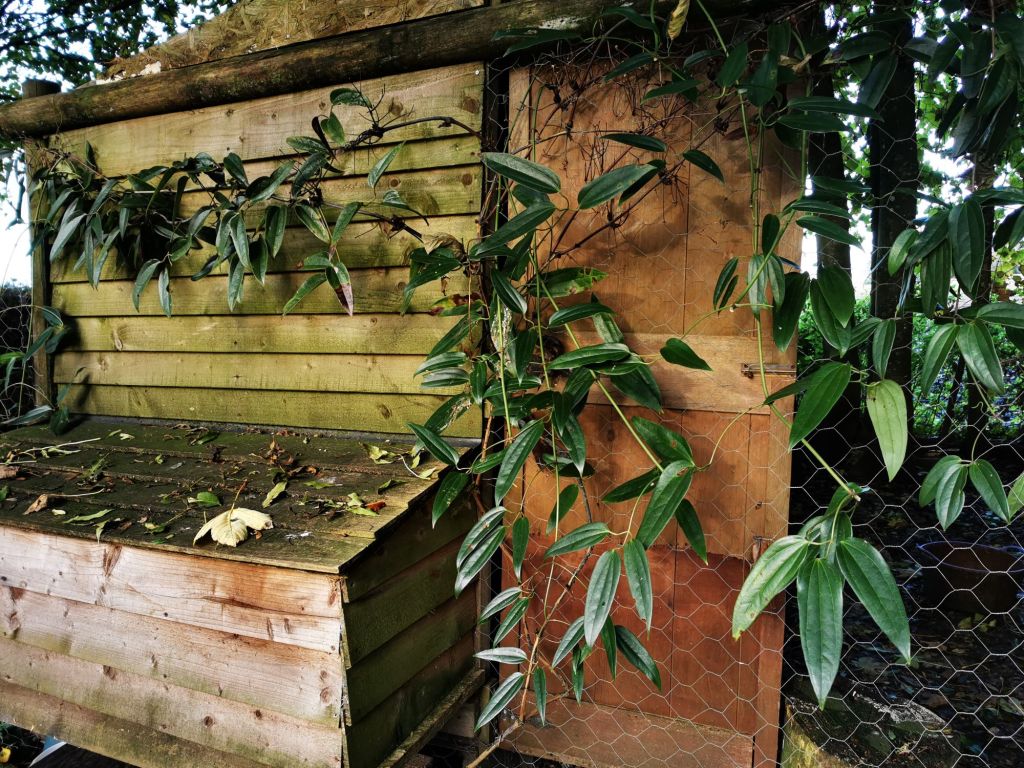
Winter Clematis
Rose Hip Berries

Different roses have different hips but my personal favourite type to use for wreaths are from rambling roses. The plants are vigorous climbers and once established they produce masses of flowers, in tight clusters which then turn into lovely, neat and tidy bunches of red berries, perfect for that traditional Christmas look.
We have a couple friends whose varieties of rambling roses (Kiftsgate and francis e. Lester) growing in their gardens are very established and they welcome us pruning them back in Autumn in return for the snippings!
Extra decorations

Pine Cones come in all shapes and sizes and are fun to go and hunt for (if you know where some pine trees grow locally!) but they can easily be purchased as mixed bags online or at the florist wholesaler for a small price. We love the traditional feel that pine cones offer and they tend to make it onto most of my Christmas decorations every year!

Dried goods
Dehydrated Chilli Peppers give a vibrant alternative to other dried goods commonly used by florists such as apple and orange slices, and cinnamon sticks. If you’ve read our blog you’ll know we grow a lot of chillies and dehydrating is one of the methods we use to preserve and have available all year round! Chillies specifically bagged up for decorations are also available at the wholesale florist or online really cheap (considering how much effort they require to grow here!)

Feathers from the Pheasant are something we come across regularly, being in the countryside but handy pre washed feathers of all kinds can be bought online so you can get really creative!
Finish with a bow
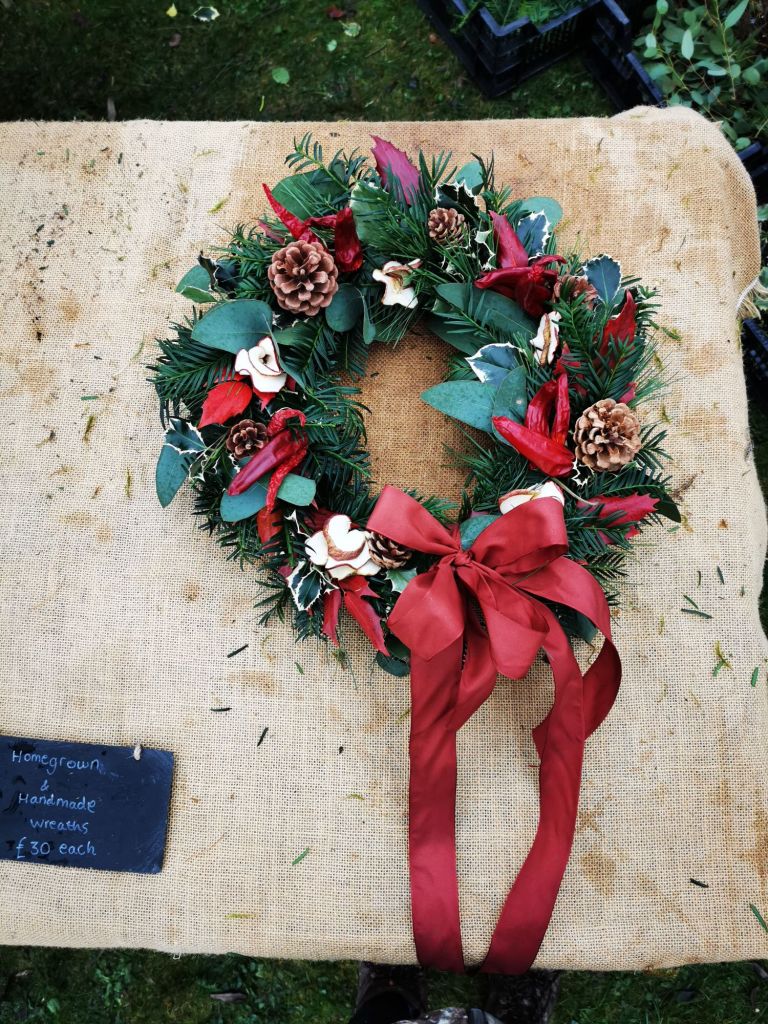
It can be as traditional or untraditionsl as you like so choose a colour and style that suits you and makes your wreath unique!
All the plants mentioned can also be used for other decorations such as table centrepiece and fireplace, and the list of plants you can use is almost infinite but these are just some of my personal favourites!
Check out our blog for more garden projects!
- My top five favourite chilli peppers to grow from seed every year!

- Our favourite plants to forage for making unique Christmas wreaths

- Harvesting compost from our worm farm that recycles waste into ‘gardeners gold’
- Our best ever cucumber harvest in the Polytunnel!
- Autumn In the Polytunnel

 Homegrown and Hopeful