We’ve been learning what makes the ideal compost and we are taking it to the next level by creating our own elements!
The most important thing when growing healthy plants is to establish a well balanced and nutrient rich soil. It soil should be able to hold water through the droughts but drain well and not get water logged! There are many different ways to create quality compost and we have been working at it for years now!
Standard 100 litre plastic bins
We have collected a few ‘darlec’ style plastic bins designed for the average home garden over the years and we use them regularly to create a lot of free compost.
They should be placed directly over soil so that the worms can come in and out easily and help to turn waste into valuable soil.
Not our choice for composting vegetable and food waste as this can attract rodents, but we use them instead for woodchip, recycling old potted plants, wood ash from the log burner, fallen leaves, grass clippings, cardboard and buckets of water from our duck pond.
Hot bins
We were kindly donated a hot bin a couple of years ago and couldn’t wait to put it to use.
A thick polystyrene plastic gives this bin insulation and the ability to heat up well, retain the heat and therefore speeding up the whole decomposition process.
We use the hot bin for most of the same things as the standard bin except less woodchip and more green waste and it does work much quicker in comparison, but it does also need much more regular topping up and harvesting.
As the whole process can be achieved in a couple months or less, adding bulky wood items is not a great idea as they will not break down in such a short period of time.
The bin must be fully sealed and rodent proof (most come with a strap to keep the door closed. Our door bulged out once and the rodents instantly found and created an entrance with pathways to extract all the best food waste from the bin! It is not really repairable and there for we cannot use food scraps with it anymore.
The bin can heat up to over 60°c in the summer meaning it will kill of many bad bacteria and rot any infiltrator seeds. I still only add weeds that are not in flower just in case!
Speeding up the process
Comfrey is a very easy plant to cultivate and frequently self seeds itself around the garden so we add large amounts of this into our compost bins throughout summer and it really helps to speed up the decompositon.
Typically the young leaves are harvested for this as they are the most nutritional. This is because the roots are very deep penetrating and access lots of extra nutrients that many other plants aren’t able to, and that plant food is used and transferred into to the fresh young leaves!
Composting food waste in our DIY wormery
Farming worms to create compost is known as vermiculture and the end product is often hailed as ‘gardeners gold‘. By far my favourite method of composting, we built our wormery back in 2018 and have been experimenting ever since.
The structure was designed with compartments separated by a material that allows worms to pass through so they can always migrate to where the food is.
Once a compartment has been transformed, we stop feeding it and harvest the soil.
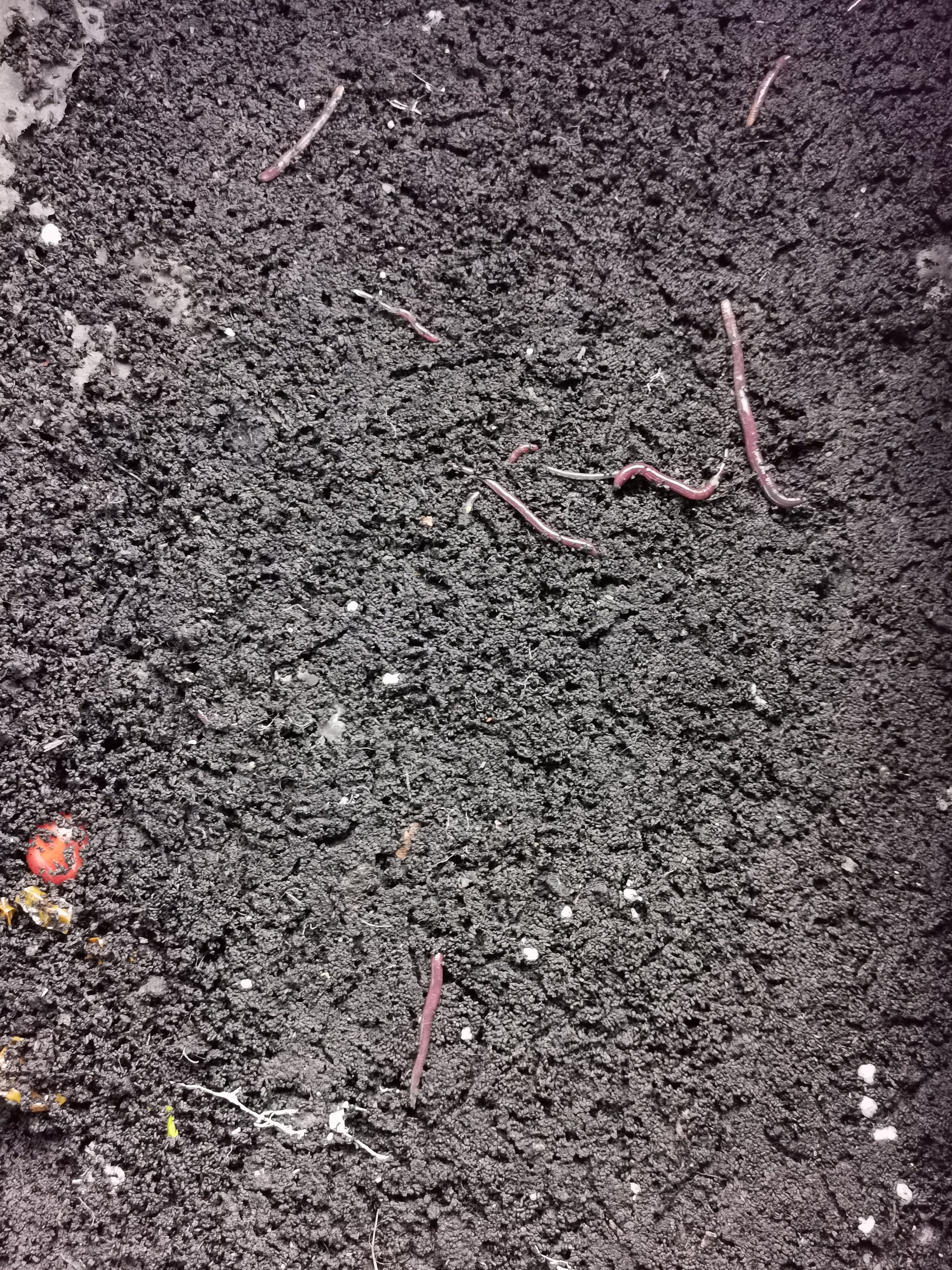
The section will then be started over again with good thick base of worm bedding which includes layers of damp cardboard, leaf mould and manure.
Ready to go worm bins
There are many worm bins on the market for home gardeners and they are an excellent option if your looking to create small quantities, frequently and don’t have large amounts of waste to transform.
In fact this is a very sustainable method on an individual/small household basis if it is well maintained and regularly harvested from.
I have seen many abandoned worm bins as people lose interest very quickly if things don’t immediately work. As worms can eat their bodyweight in food scraps a day and breed prolifically, they can be demanding and in a closed environment it wouldn’t take long to starve the whole lot!
Many premade worm farms include a tap for harvesting excess juices known as ‘worm tea’, a very strong liquid fertiliser.
Adding grit compost bins
Grit is required in order for worms to digest so if the material that you are adding to your composting system doesn’t include grit then it is definitely worth adding some to ensure they have access to it. This isn’t strictly necessary for methods such as the ‘darlec’ style bins where the worms have access in and out, but its better to provide it to keep them in and will help with air circulation and drainage to the final product.
Egg shells are our go to for grit and these end up in our food caddy daily now. They are rinsed to remove residue and crushed before adding to the bin so they are easy for the worms to consume. Oyster shell and other poultry grit is fine and so is horticultural sand, biochar, perlite and something we sit on a lot of for free.. Chalk!
Creating BioChar in our homemade burner
Wood is burned without oxygen at high temperatures and transformed into biochar. Luckily we had a friend who wanted to have a go at making a biochar kiln for us and so we have an inner cylinder where the wood is loaded into and then sealed with a lid. A fire is lit in the bottom compartment and burns the wood without direct contact, producing the very valuable biochar.
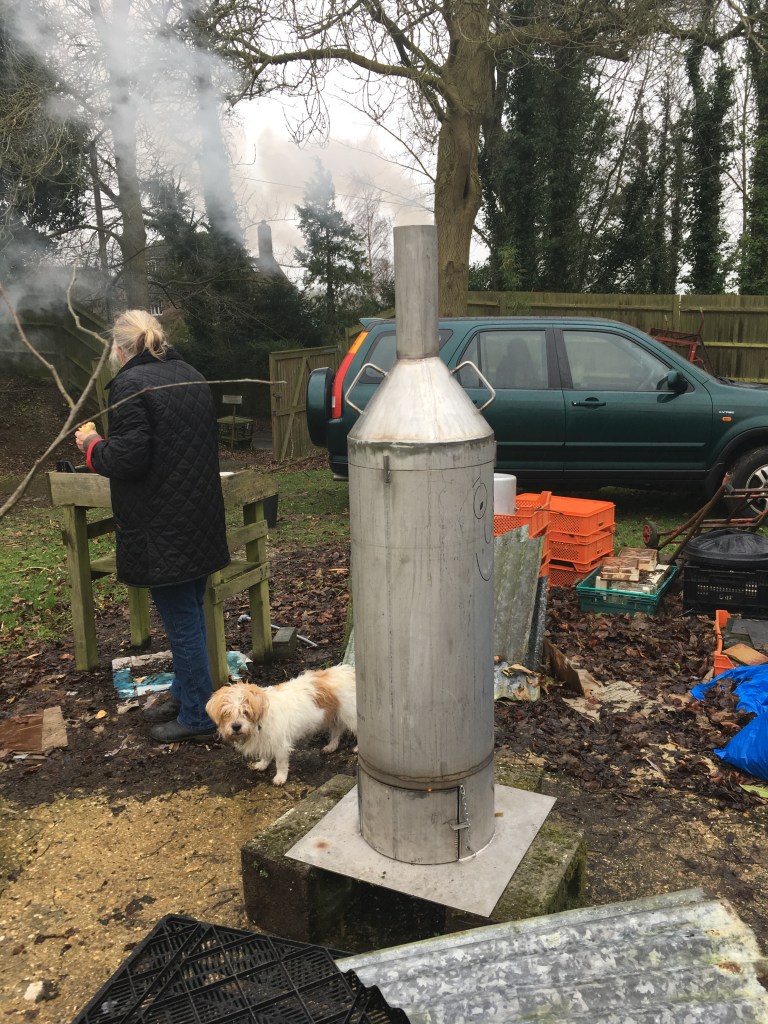
We add it to our homemade composts at different quantities depending on where we are going to use it in the garden.
We’re already seeing great results as plants grown with added biochar appear lush and healthier than ever! It’s benefits were very noticeable when we added a large quantity to the Manure based mulch used around the bases of our fruit trees and they went on to fruit prolifically that that year. We have topped them up every year since and enjoy great harvests.
The porous nature of biochar means that it holds nutrients and continuously feeds plant roots over time. Together with beneficial bacteria, these additions will help to create the ultimate compost!
Also known as ‘Activated charcoal’, in powder or grit form is not cheap in the UK and used in many products including pharmaceuticals, for its natural healing healing powers. Our ducks enjoy a dose of it and scoff it like a treat which transfers into their manure (which literally appears black after eating!) and is naturally spread around the garden!
Manure compost heap
A very popular and satisfying method of composting is to dump a decent amount of animal Manure on a patch of weeded soil, cover it over and walk away (for a year ideally!). This is a simple and very effective way of composting if you have the space and resource. The more the better and local stables commonly offer trailer loads to gardeners and allotments just to get rid of the stuff.
We used to go to the stable and dig it out ourselves until we added ducks and chickens to our permaculture garden and they now provide us with plenty of regular manure.
Worms will transform it into very nutritional, dark soil that can be used as a fertiliser or as part of a great potting mix, or mulch.
As there is a continuous supply, we are able to use our manure as part of many different composting projects and now through experience we are able to create tons of soil for free every year which helps to feed and replenish our multiple gardens including our vegetable garden!
More from the blog
- My top five favourite chilli peppers to grow from seed every year!
- Our favourite plants to forage for making unique Christmas wreaths
- Harvesting compost from our worm farm that recycles waste into ‘gardeners gold’
- Our best ever cucumber harvest in the Polytunnel!
- Autumn In the Polytunnel
- Polytunnel Progress: Building a Heated Seed Bed
- Growing Dahlias from Seed and overwintering tubers
- Chilli and Sweet Pepper Review
- First Summer in the Polytunnel
- Growing Summer Hanging Baskets
- First Spring In the Polytunnel
- Installing the Polytunnels
- First winter in the polytunnel
- Chilli and Sweet Pepper harvesting in November
- The Journey Begins

 Homegrown and Hopeful